We all know the feeling. You’ve cranked the thermostat up to a tropical setting, you’re wearing your thickest jumper, yet there’s still a mysterious, icy breeze tickling your ankles. If you live in the North East, you know exactly what we’re talking about. The culprit is usually the window—glass is fantastic for letting light in, but it’s notoriously terrible at keeping heat in.
It is estimated that around 30% of a home’s heating energy is lost through windows. That is essentially taking a third of the money you spend on heating and throwing it straight into the garden. While double glazing helps, it often isn’t enough to stop the chill entirely. This leads many homeowners to ask a crucial question: are shutters good for insulation and reducing heat loss?
At Jacksons Blinds, we have fitted thousands of window dressings across Newcastle and Gateshead, and we have seen firsthand the difference a quality installation can make. Shutters aren’t just about making your neighbours jealous of your kerb appeal (although they definitely do that); they are a serious weapon in the war against winter fuel bills.
What actually are shutters?
Before we dive into the science of keeping your toes toasty, let’s clarify what we are talking about. Unlike curtains or fabric blinds that hang freely, shutters are solid window coverings—typically made of wood or faux wood—that are fitted directly into the window frame.
They consist of a frame and horizontal slats (louvres) that can be tilted open and closed. Because they are “furniture for your windows,” they become a semi-permanent fixture of the house. They look fantastic, but their sturdy construction suggests they might do more than just filter light.
How shutters provide insulation: the technical stuff
So how does wood or PVC stop the cold? It all comes down to physics.
Glass is a conductive material, meaning it transfers heat energy quite easily. In winter, the warm air inside your room hits the cold glass, cools down, and sinks, creating that nasty convection current that feels like a draught.
Insulating shutters work by creating a sealed barrier. When the shutter panels are closed and the louvres are shut tight, they trap a layer of air between the shutter and the window pane. Air is a poor conductor of heat, which makes it an excellent insulator. This “dead air space” acts as a buffer zone, preventing the warm air in your room from hitting the cold glass.
Furthermore, because made-to-measure shutters from Jacksons Blinds are fitted precisely to your window frames, they significantly reduce air leakage. Unlike curtains, which often leave gaps at the top, bottom, and sides where heat escapes, shutters provide a snug fit that keeps the warmth where it belongs: inside with you.
Types of shutters for insulation
Not all shutters are created equal, though most will offer a significant upgrade over a bare window or a thin roller blind.
This is how materials stack up.
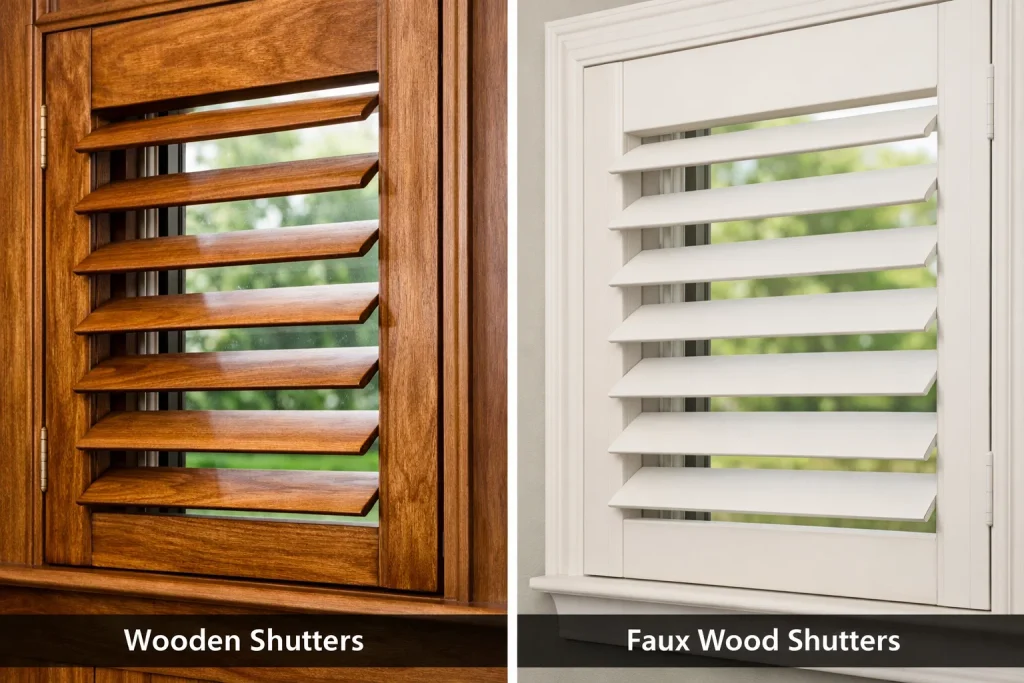
Wooden shutters
Wood is a natural insulator. If you think about it, nature designed trees to withstand the elements. Wood contains tiny cellular air pockets within its structure, which naturally resist heat transfer. Our range of wooden shutters adds a robust, organic barrier to your windows, absorbing and reflecting heat back into the room.
Faux wood shutters
For areas prone to moisture, like kitchens and bathrooms, faux wood is often the material of choice. But are they insulating? Absolutely. High-quality faux wood (often made from composite materials or PVC with an aluminium core) is incredibly dense. This density provides excellent thermal resistance. In fact, some energy efficient window shutters made from faux wood can offer slightly higher insulation values than natural timber because the material is uniform and non-porous.
Shutters vs other energy efficient window treatments
You might be thinking, “Can’t I just buy thick curtains?” You can, but they rarely perform as well as shutters.
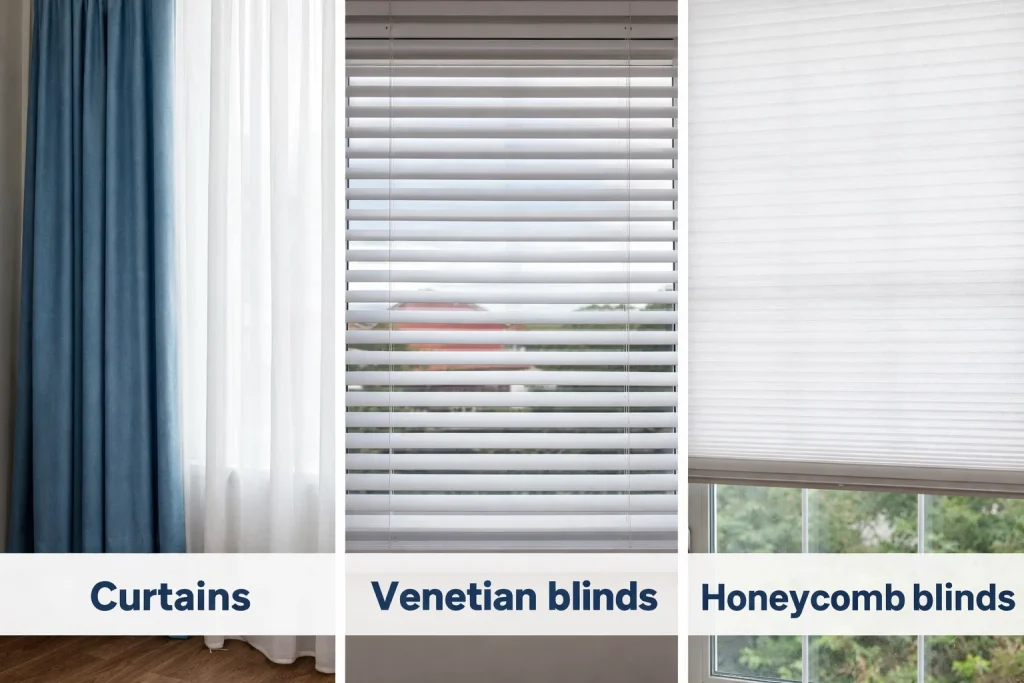
- Curtains: Even heavy, thermal-lined curtains have a fatal flaw: gaps. Air circulates behind the curtain, cools against the glass, and drops out the bottom, creating a cold cycle. Unless your curtains are Velcroed to the wall (which isn’t a great look), heat will escape.
- Venetian blinds: While they look somewhat similar to shutters, standard aluminium or plastic Venetians are thin and hang loosely. They offer minimal thermal resistance.
- Honeycomb blinds: These are excellent insulators, but they lack the durability and light control options of shutters.
Shutters sit in the “Goldilocks” zone. They offer the sealing capability of a storm window with the aesthetic beauty of high-end design.
Benefits of energy efficient shutters
Beyond just lowering your heating bills, installing insulating shutters brings a host of other benefits that make your home life more pleasant.
Sound insulation
The same barrier that stops heat from escaping also stops noise from entering. If you live near a busy road in Gosforth or a noisy street in Gateshead, the solid barrier of shutters can dampen traffic noise, giving you a better night’s sleep.
Keep your home cool in the summer
Insulation works both ways. In the rare event we get a scorching British summer, you can close your shutters to block direct sunlight. This stops your home from turning into a greenhouse, keeping the interior cool without the need for fans or air conditioning.
Durability
Curtains fade and fray. Cheap blinds snap. Shutters are built to last for decades. When you factor in the longevity, they are a cost-effective investment for your home.
Are there any downsides?
We believe in being honest with our customers. The main consideration with shutters is the initial cost. They are generally more expensive upfront than a set of roller blinds because they are a custom-manufactured product that requires expert installation.
However, it is important to view this as an investment rather than an expense. Energy efficient window shutters add value to your property and, over time, can help recoup their cost through lower energy bills.
Another factor is light. When shutters are closed for maximum insulation, you are blocking out natural light. However, the versatility of the louvres means you can tilt them slightly to let light in while still maintaining a degree of thermal protection—something you can’t do with curtains.
Tips for maximising insulation with shutters
If you decide to take the plunge, here are a few tips to get the most out of your new window dressings:
- Close them at dusk: As soon as the sun goes down, close the panels and the slats. This traps the heat accumulated during the day.
- Check the fit: Insulation relies on a tight seal. This is why DIY shutters often fail. Professional measuring and fitting, which we provide for free at Jacksons Blinds, ensures there are no gaps for draughts to sneak through.
- Layer up: For the ultimate thermal protection in extremely cold rooms, some homeowners pair shutters with curtains. It’s the “belt and braces” approach to insulation.