Bay windows. They’re the architectural equivalent of a hug—adding space, light, and a touch of Victorian drama to your home. But let’s be honest: trying to dress them can feel like solving a geometry puzzle without a protractor. If you’ve ever stood in front of your bay window, tape measure in hand, sweating over angles and drop lengths for the perfect window treatments, you are not alone.
Finding the perfect blinds for these beautiful (yet demanding) features is crucial. Get it right, and you elevate the room to Architectural Digest levels. Get it wrong, and you’re left with gaps, light leaks, and a headache.
At Jacksons Blinds, we’ve measured more angles than a maths teacher. We know exactly what makes a bay window tick (and look fantastic). Whether you’re after privacy, warmth, or just want to stop the neighbours seeing you in your pyjamas, this guide covers the best bay window blinds that will complement any bay window perfectly.
Understanding your bay window
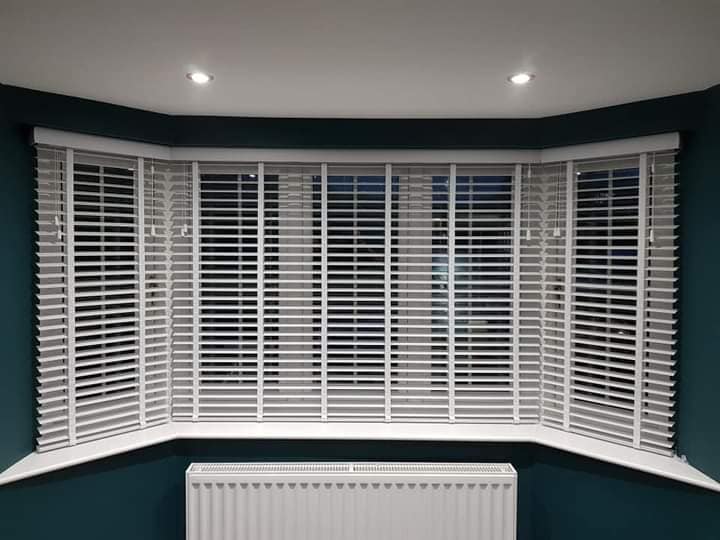
Before you start browsing fabric swatches, it helps to know exactly what beast you are taming.
In the UK, we generally encounter three main types:
- Angled bay (Victorian): The classic. Three or more windows joined at angles (usually 135° or 150°). They look stunning but require precise measuring to ensure the blinds don’t clash in the corners.
- Box bay: A square or rectangular shape consisting of a flat front window and two side windows at 90° angles.
- Bow window: A curved bay, usually made up of four or more casement windows joined to form an arch.
Each shape has its quirks, but the goal is always the same: a seamless fit that maximises light and space.
Factors to consider when choosing bay window blinds
Picking blinds isn’t just about “that one looks nice.” To avoid buyer’s remorse, keep these five pillars in mind:
Light control
Do you want to flood the room with morning sun, or are you trying to create a vampire-friendly cinema room? Slatted blinds (like Venetian) offer light filtering, while solid fabrics (Roman or Roller) are often all-or-nothing unless you choose specialised fabrics.
Privacy
Bay windows often face the street, meaning passersby have a front-row seat to your life. You need a solution that lets light in without putting your life on display.
Style and aesthetics
Your blinds should complement the room, not fight with it. A modern Vision blind might look odd in a period property full of antiques, just as heavy drapes might suffocate a minimalist new-build.
Insulation
Glass is a terrible insulator. A large bay window can be a major source of heat loss in winter. Thermal options, particularly pleated honeycomb blinds, can act as a duvet for your windows.
Ease of installation
Bay windows have tight corners and protruding handles. If you aren’t confident with a drill and a spirit level, professional installation (which we offer for free, by the way) is often the safer bet.
Types of blinds suitable for your beautiful bay windows
Plantation shutters come in a variety of styles to suit different windows and tastes. At Jacksons Blinds, we can help you choose the perfect design during our free home visit.
Roman blinds
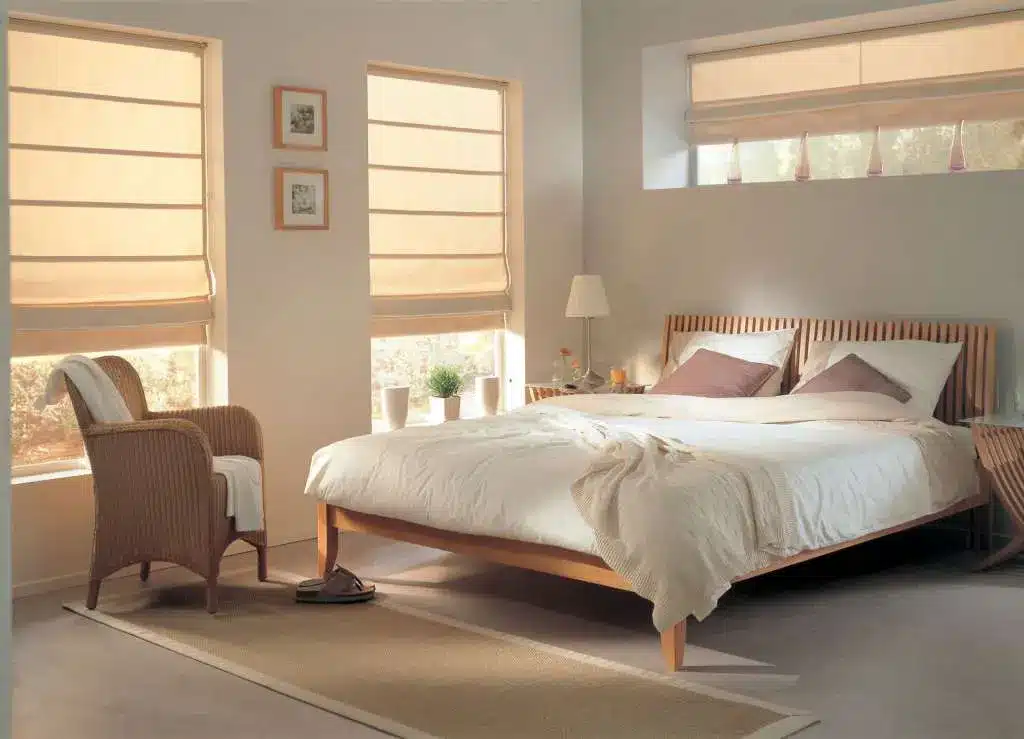
Roman blinds are the sophisticated choice. Made from soft fabric that folds neatly when raised, they add texture and warmth to a room.
- Why they work: They soften the hard angles of a bay window.
- Best for: Living rooms and dining areas where you want a “dressed” look. They look exceptional when layered with curtains.
Pro tip: Use thermal interlining to trap heat in older Victorian homes.
Venetian blinds (wood, faux wood and aluminium)
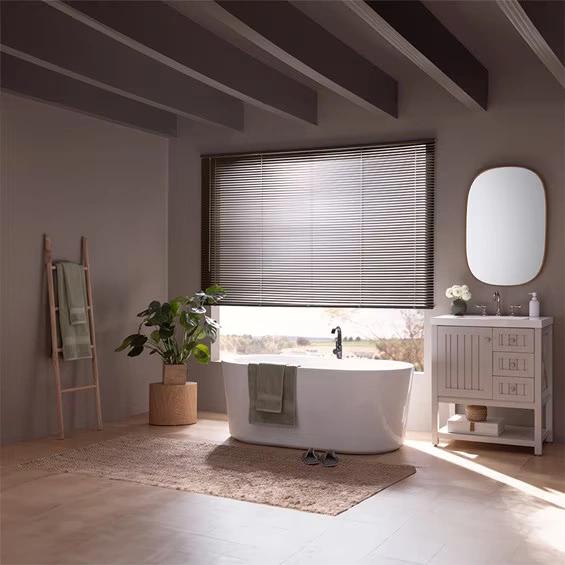
The horizontal slats of Venetian blinds give you precise control over light and privacy—just tilt them to see out while stopping others from seeing in.
- Why they work: They are versatile and fit neatly into the individual frames of a bay.
- Best for: Studies and living rooms. Aluminium is great for modern vibes; wood (or faux wood blinds) suits traditional decor.
Note: Faux wood is moisture-resistant, making it perfect for bathrooms or kitchens.
Vertical blinds
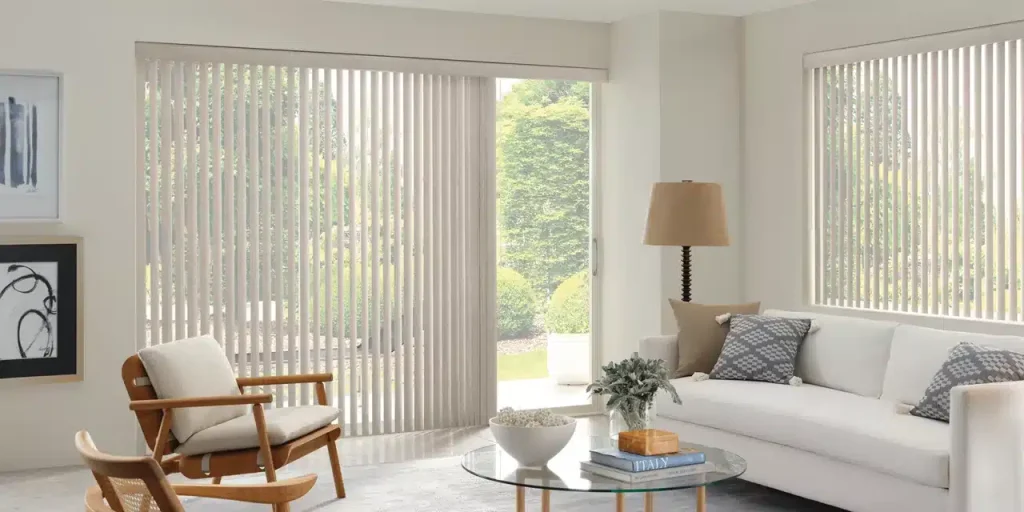
Often misunderstood as “office decor,” modern Vertical blinds are sleek and incredibly practical for larger windows.
- Why they work: They are excellent for curved bow windows where other blinds might struggle to fit. You can draw them fully back to reveal the view.
- Best for: Floor-to-ceiling bays or patio doors within a bay.
Pleated blinds
These are made from crisp, pleated fabric that stacks very tightly when raised.
- Why they work: The “honeycomb” or cellular structure traps air, making them excellent insulators.
- Best for: Bedrooms and drafty rooms that need temperature control.
Perfect Fit blinds
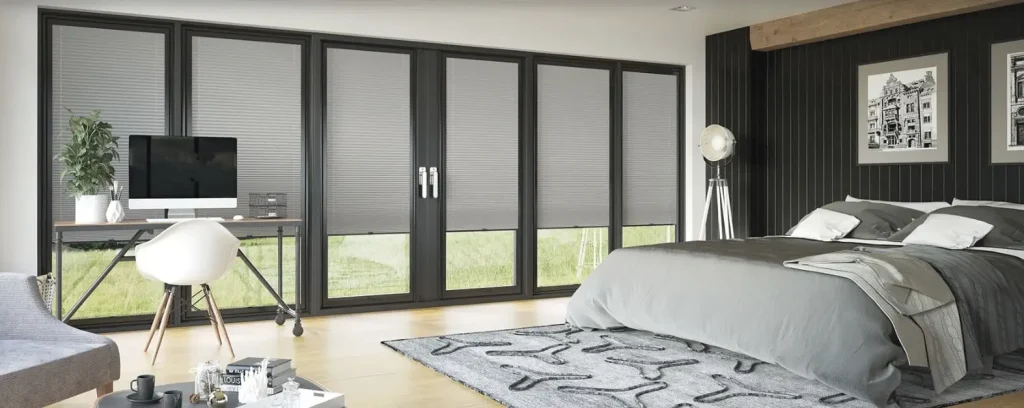
If the thought of drilling holes in your uPVC frames makes you queasy, Perfect Fit blinds are the answer. They clip directly onto the window bead.
- Why they work: They move with the window, meaning no swinging blinds when you open the window for fresh air. They sit flush against the glass, freeing up your windowsill for plants and photos.
- Best for: Conservatories and uPVC bay windows.
Vision blinds (Day and Night blinds)
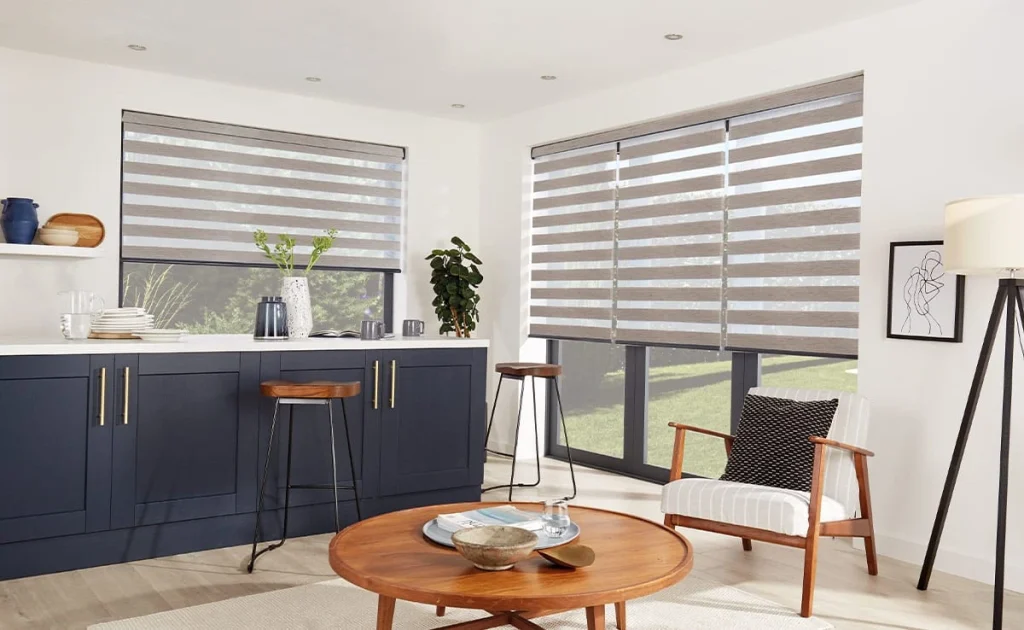
Vision blinds are also known as “Zebra” blinds, these feature alternating strips of sheer and opaque fabric.
- Why they work: They look incredibly contemporary and offer a cool way to control light without blocking the view entirely.
- Best for: Modern living rooms facing the street.
Wooden blinds
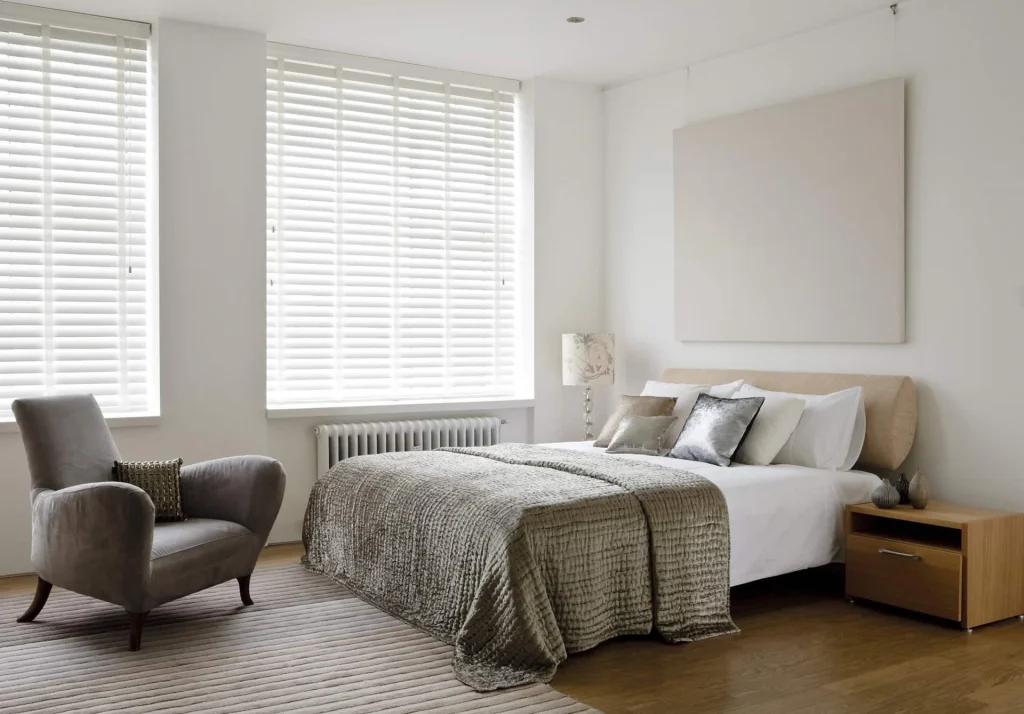
Wooden blinds brings a natural, organic feel to a room.
- Why they work: They are sturdy and timeless. White wooden blinds are especially popular for brightening a bay.
- Best for: Living rooms and bedrooms.
Blinds for specific rooms
Living room
(recommended choice – wooden venetian blinds)
The salon is where you show. You want style, but you also need to manage glare on the TV. Roman blinds offer a luxurious feel, while Wooden Venetian blinds provide a classic, clean look that suits almost any furniture style.
Bedroom
(recommended choice – blackout options)
Sleep is king here. You need darkness. Blackout Roman blinds are fantastic for stopping streetlights from ruining your slumber. Alternatively, Pleated blackout blinds fit snugly to reduce light gaps around the edges.
Study window
(recommended choice – vertical blinds)
If you’re working from home, glare is the enemy. Venetian or Vertical blinds allow you to tilt the slats to deflect sunlight away from your monitor while still keeping the room bright enough to stay awake.
